Every pawpaw growing guide says the same thing: shade your seedlings. Pawpaw is an understory tree, they explain. It evolved under the forest canopy. Give young plants 30–50% shade or they'll stress out.
We followed that advice for a while. Then we stopped, mostly out of convenience — we had a batch of seedlings in black nursery containers sitting in full sun on the property in Andreas and didn't get around to moving them. What happened was not what the guides predicted.
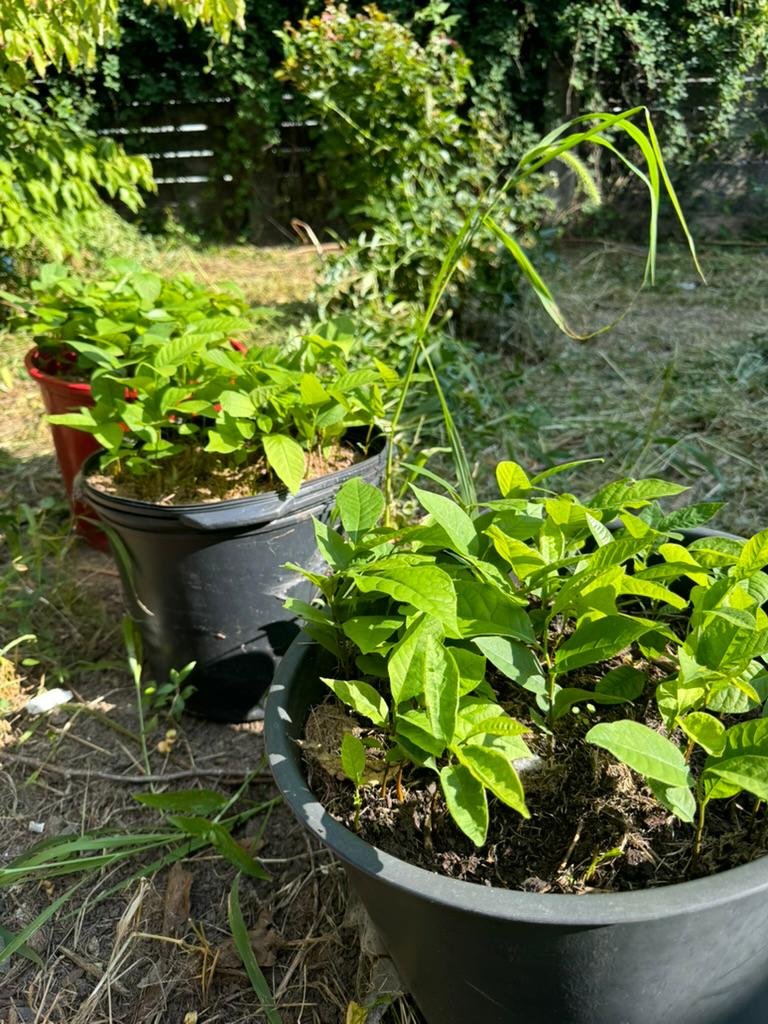
Pawpaw seedlings in full sun, Andreas, PA — black nursery containers, no shade cloth, mid-summer.
What the Shade-Grown Seedlings Looked Like
The seedlings we'd been growing under 40% shade cloth were alive and growing, but stretched. The stems were thinner than I wanted. Internodes were longer — that leggy, reaching quality you see when a plant is working for light. The leaves were a good size but the overall structure felt soft. If you put those plants in the ground and had a deer walk by, they'd fold.
We'd attributed this to normal first-year pawpaw behavior. Slow-growing by nature, the conventional wisdom said. Give it time.
What the Full-Sun Seedlings Looked Like
Shorter internodes. Thicker stems. Leaves held more horizontally, taking in light efficiently rather than angling for it. The plants had a denser, bushier appearance — more nodes, more branching potential, more structural integrity. They looked like plants that had been pushed to perform rather than coddled.
The color was good — deep green, not the washed-out pale you'd expect from sun stress. There was no wilting during the heat of the day as long as we kept the containers watered. Morning temperatures in the 70s, afternoon highs in the upper 80s and we didn't lose a single one.
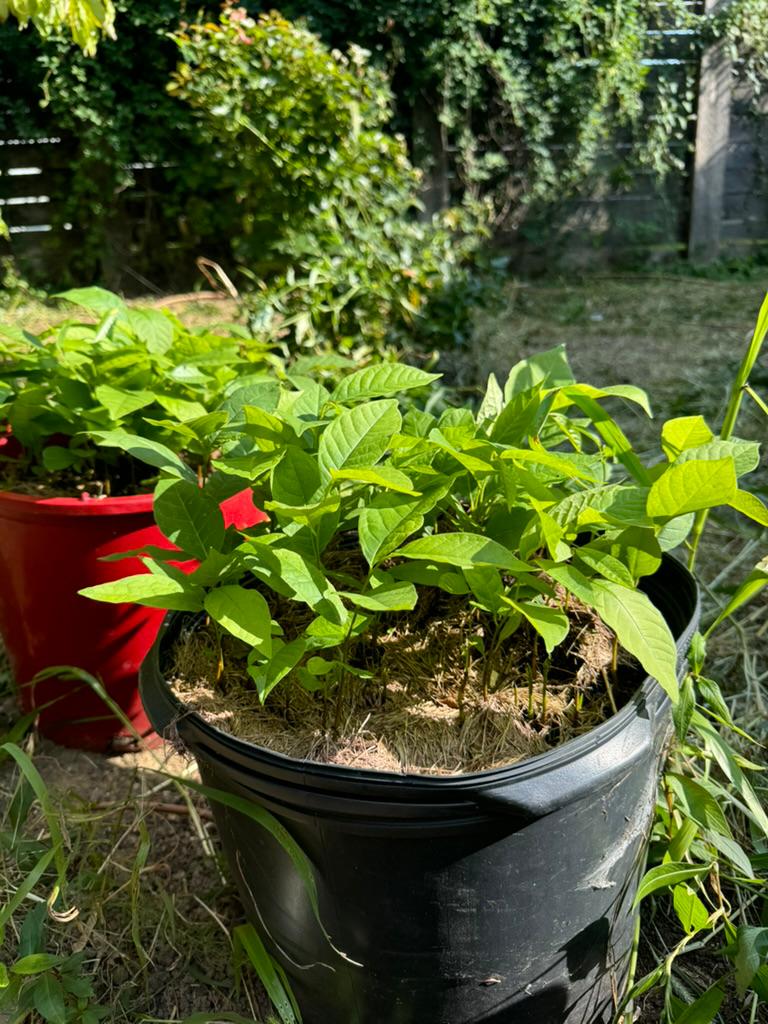
Close-up of the same batch — note the dense leaf coverage and compact node spacing. No shade cloth used.
Why This Might Be Happening
My read on it: the "pawpaws need shade" advice was developed primarily for seedlings transplanted directly into the ground — and that's a different situation than container seedlings. In the ground, a young transplant has a compromised root system dealing with new soil, temperature swings at the root zone, and competition from surrounding vegetation. Full sun on top of all that is legitimately stressful.
In a container, the root zone is controlled. We can water on a consistent schedule. The container holds moisture. The soil stays at a more stable temperature (yes, black containers get warm, but they're not fluctuating the way bare ground does in sun). The seedling doesn't have to compete with anything. In that context, full sun just means more photosynthesis — and the plant uses it.
What the Research Says (Sort Of)
Pawpaw (Asimina triloba) does show shade tolerance, and in its native habitat it does grow as an understory tree. But "shade tolerant" doesn't mean "shade requiring." It means the plant can survive and grow in lower light conditions — which is an advantage for a native tree in a competitive forest environment, not a prescription for how to grow it in your nursery.
Research on pawpaw light requirements (including work from Kentucky State University, the main center for pawpaw cultivar development) generally shows that mature trees fruit more heavily in full sun. The shade-for-seedlings advice was largely extrapolated from field transplanting observations, not container nursery production.
Practical Takeaways
Container Seedlings
Full sun is fine — potentially better than shade. Keep containers consistently watered. Black containers in summer may benefit from being grouped together to reduce individual soil heating.
In-Ground Transplants
First-year transplants in the ground still benefit from some shade protection, especially in hot climates. The root system isn't established enough to support full sun transpiration demand.
Second Year and Beyond
Full sun is the goal. Once a pawpaw tree has a functional root system, it will outperform shade-grown trees in growth rate and eventual fruit production.
Starting from Seed
Don't stress about shade for germination. Once the shoot emerges, place in a bright location. A south-facing spot or full sun outdoors works well for container seedlings from the start.
What We Do Now
At Andreas, we start seeds in containers and grow them through their first season in full sun with daily watering during summer. The seedlings we put into the ground from this system are noticeably more vigorous than the shade-grown stock we used to produce. Stems are thicker, root balls are denser, and first-year survival rates after transplanting have been better.
We're not saying shade cloth is useless — it has a place in protecting transplants going into the ground in midsummer heat. But for container seedlings being grown through spring and summer before a fall or following-spring transplant, full sun with consistent water has been the better approach for us.
Your mileage will vary with climate. In zones 8+ with genuine summer heat stress, a bit of afternoon shade might make sense. In Pennsylvania zone 6, it hasn't been necessary.
Related Reading
Seeds from the Same Stock
Pre-stratified pawpaw seeds from our Andreas, Pennsylvania orchard. Susquehanna and Allegheny cultivars. Ready to plant in spring — grow them your way.
Order Seeds — $15 per 10 Seeds